Oct 3, 2026Buying Guides
Pannier Bag Sizing Guide: Fit, Volume and Rack Clearance
Sizing a pannier comes down to the rack, the clearance and the volume you actually need. A buyer-side guide to specifying a pannier that fits once.
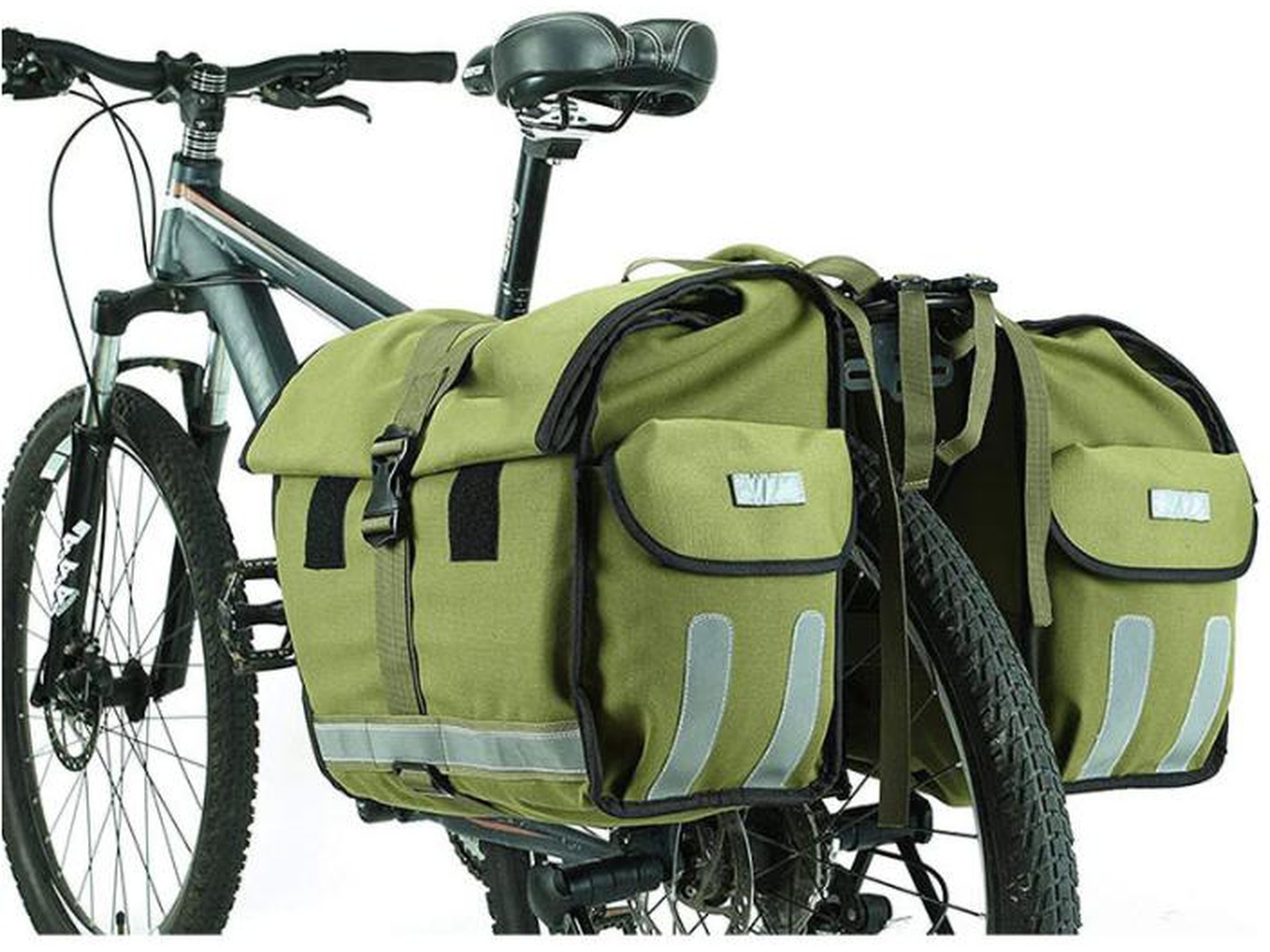
A pannier that does not fit is not a discount — it is a return, a review and a missed season. Sizing is decided by three things: the rack it hangs on, the space it has to occupy, and how much you actually need to carry. This guide walks through all three so you can specify a pannier that mounts once and works all year.
1. Measure the rack before you choose the bag
Most fit problems come from specifying the bag first and checking the bike second. Take these three measurements and keep them with your product brief:
• Rail-to-rail width — the distance between the two rack rails where the bag sits. This drives bag width and hook spacing.
• Rail diameter — the tube thickness, usually 8–10 mm on touring racks and thicker on cargo and trekking racks. It determines which hook fits.
• Load rating of the rack — total weight the rack is designed to carry, including the bag. A 25 L canvas pannier plus contents is heavier than people expect.
Also note whether the rack is front, rear, or both. Rear racks are longer and take a single wide pannier or a pair; front racks usually take one smaller pannier plus a low front bag.
2. Hook type and spacing decide compatibility
The hook is the interface between bag and rack. The three common systems:
Compared by Typical use — What to match:
Top-tube hook (clip-on style)
Typical use: Rear racks on older or entry bikes; What to match: Rail diameter and rack rail thickness
Two-hook MIK / HD style
Typical use: Modern rear touring racks; What to match: Rail-to-rail spacing, usually fixed pairs
Quick-release / Snaplock
Typical use: City and commuter racks; What to match: Mounting bar diameter and clip range
Two details cause most failures: hook spacing that does not match the rail spacing, and a hook that is welded to a strap too short to reach the rail. Specify the hook system and the rail spacing in the brief, and require a photo of the finished pair mounted on a real rack before mass production.
3. Work out the volume you actually need
Volume is the number buyers feel most, so it is worth getting right. A useful approximation:
Usable litres ≈ width (cm) × height (cm) × depth (cm) × 0.7
The 0.7 factor accounts for the shape of a soft bag and its lining. As a reference point for real use:
• 15–20 L per pannier — city commuting, tool and tube, rain layer, lunch.
• 20–30 L per pannier — touring and one-week trips, carrying capacity for two.
• 30 L and up — expedition, long-distance touring, or carrying a tent and sleeping gear.
For double pannier sets, buyers often want asymmetric volume — a slightly larger outer pannier for bulky items and a slimmer inner one for documents and a laptop. Specify that explicitly; it is rarely the default.
4. Clearance is where good designs fail
Once volume is right, check the space around it. A bag that is correct in every other way still fails if it fouls the bike:
• Derailleur clearance — the lower inner corner of a rear pannier must clear the derailleur cage on the right side. This is the single most common reason a "correct" pannier cannot be mounted.
• Mudguard and frame clearance — a bag that sits too low collects road spray and rubs the tyre on full suspension bikes.
• Pedal and crank clearance — front panniers need more inner offset than rear ones.
• Luggage rack overlap — if a top-tube bag sits over the pannier, the two hook positions must not collide.
Ask for a dimensioned drawing showing the inner edge position relative to the rail, and specify the minimum clearance you need in the brief.
5. Load rating and construction decide how long it lasts
Sizing is only useful if the bag survives being loaded:
• Webbing width and bar-tack stitching at the top attachment points — bar-tacks, not a few straight stitches, are what prevent the hook pulling out.
• Stitch density on the load-bearing seams, and a reinforced base panel where the bag sits against the rack.
• Zipper rating — a moulded, close-coil zip on the main opening; a load-bearing bag with a light zip fails at the zip first.
• Base material — a reinforced or double-layered base extends life noticeably on touring and commuting use.
• Fittings — metal hooks and rivets rather than plastic on load points, and D-rings positioned so straps can be tensioned.
"We ordered 25 litre panniers for a touring bike, and they turned out to be too wide for the rear rack and fouled the derailleur on the right. The sample photos had not shown the inner edge, so we only found out after the goods landed."
What to send us for a sizing recommendation
Send four things and we will come back with a bag that fits:
1. A photo of the rack, taken from behind the bike and from the side.
2. Rail-to-rail width and rail diameter, or the rack model.
3. Which hook system the bike uses.
4. The volume you need per pannier, and the material you prefer — TPU for full waterproofing, canvas for touring, or coated fabric for city use.
Samples normally take 7 to 14 days to make and ship, and bulk production follows an approved sample, so the fit question gets settled before you commit to a production run.