Oct 3, 2026Buying Guides
How to Specify a Waterproof Cycling Bag That Actually Stays Waterproof
Water finds four weak points in a cycling bag: fabric, seams, closures and openings. Here is what to specify so the bag you order performs in real weather.
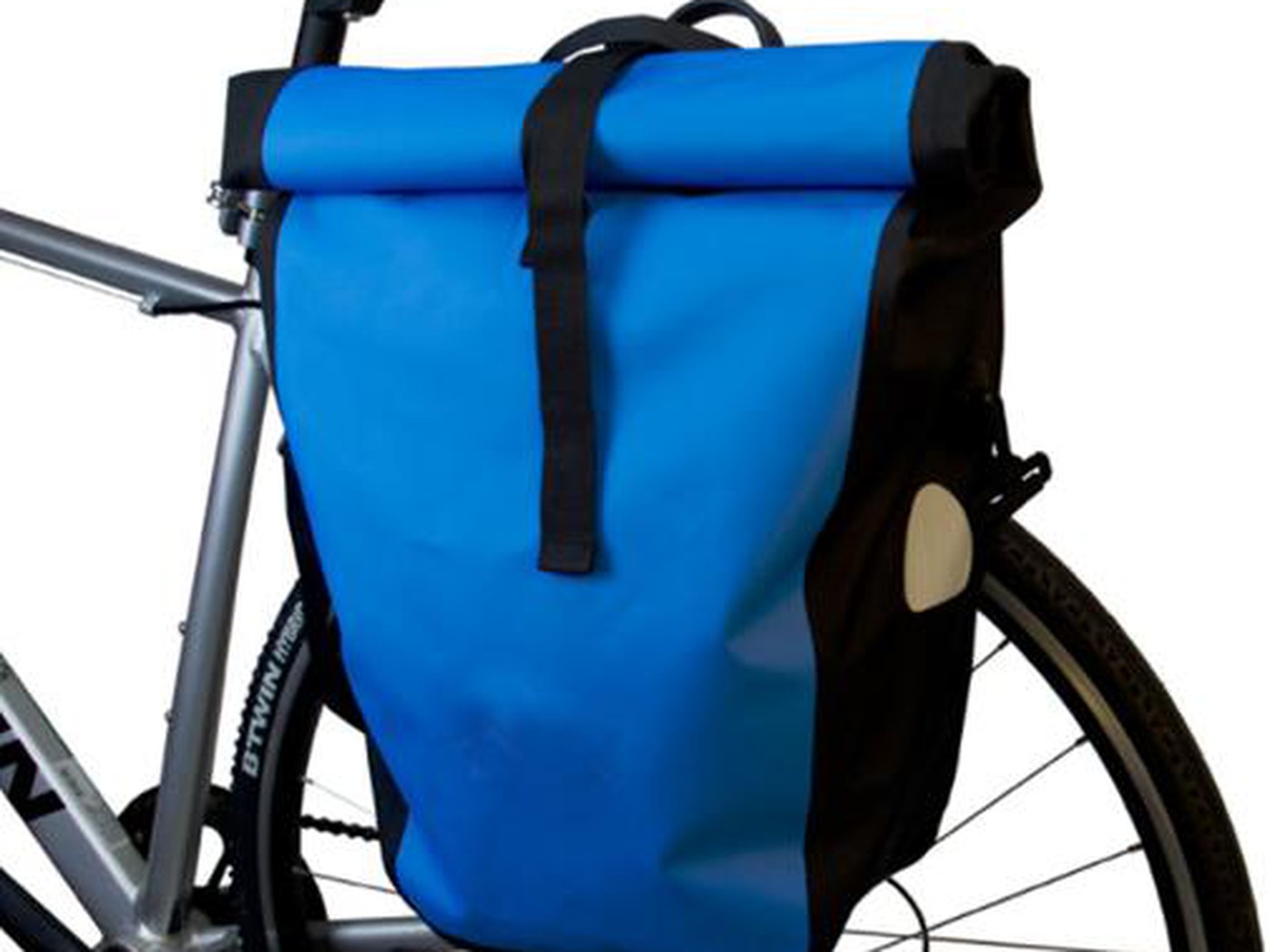
Most "waterproof" cycling bags are only waterproof on the label. Water finds the four weak points — fabric, seams, closures and openings — and a bag that leaks at any one of them is just an expensive rain cover. This guide explains what to specify so the bag you order performs in real weather, and what to ask your supplier before you sign off a sample.
1. Waterproof fabric is only half of the specification
Waterproof bag fabrics fall into three broad groups, and the difference shows up in wet weather:
Compared by Typical character — Where it fits:
Coated nylon or polyester
Typical character: Light, affordable, moderate abrasion resistance; Where it fits: Dry-weather panniers, city use
Ripstop with PU coating
Typical character: Tear-resistant, heavier, better water hold; Where it fits: Touring, year-round commuting
TPU or PVC tarpaulin
Typical character: Fully waterproof, easy to wipe clean, heavier; Where it fits: Rain-season touring, expedition, TPU pannier sets
Denier (the thread thickness rating) tells you about abrasion resistance, not waterproofness — a 600D fabric can be completely untreated. Ask the supplier directly: is the coating on one side or both, and is it bonded to the base fabric or merely sprayed on?
2. Seams: welded beats stitched for waterproof models
A stitch line is a channel water can travel along. There are two ways manufacturers close it:
• Stitched and taped — the seam is sewn, then covered with seam tape or sealant from the inside. Good for heavy loads and everyday bags.
• High-frequency welded — the two fabric layers are fused with heat and pressure. No thread, no hole, and it is the standard for genuinely waterproof TPU and PVC panniers.
If a supplier quotes you a waterproof TPU pannier with a stitched main seam, that is a contradiction worth catching before you pay for tooling. Our production floor runs high-frequency welding specifically for this reason.
3. Zippers and closures leak more often than fabric
A bag with a waterproof body and a cheap zipper is a bucket that empties from the top. Four things to check:
1. Zipper type — molded or coil, with a close fit between teeth. Open, cheap zips let water straight through the coil.
2. Storm flap or covered zip — a strip of fabric over the zip line blocks most rain.
3. Slider count and placement — for panniers, a single centre slider that cannot open from the side stops rain blowing straight in.
4. Backing — a waterproof but unfinished reverse side of the zip tape is the most commonly missed detail in a supplier quote.
4. Openings, roll-tops and where water actually gets in
Even a perfectly welded, perfectly zipped bag leaks if the opening is designed badly:
• Roll-top closures shed water far better than hook-and-loop or press studs, provided the roll is at least three turns.
• Drainage matters on saddle and seat bags — a small drain hole prevents water from pooling inside and stretching the lining.
• Bottle pockets should be open at the top; a sealed pocket traps water until the next heat of sun turns it into a bulge.
• Stitching around attachment points is where the bag meets the rack or the frame. This is where load concentrates and where water enters first.
"Everything else on the bag looked fine, but after one long wet ride water was pooling inside the pannier. The seam had been sewn rather than welded, and nobody mentioned it in the spec."
5. What to ask your supplier before you order
Send these questions with your inquiry — the answers separate suppliers who build bags from suppliers who relabel them:
• Which fabric, coating and denier, and is the coating single or double sided?
• Are the main seams stitched and taped, or high-frequency welded?
• Which zipper brand and type, and is there a storm flap?
• How is water tested before packing, and what test standard does your factory use?
• Can you send a sample in the exact fabric and seam construction you quoted?
Any supplier that answers these precisely is worth a sample order. One that answers vaguely about "PVC material, good quality" is not.
Next step
Send us the category you are buying into — pannier, saddle, handlebar, top tube or tank/seat bags — with your target volume, the material you prefer, and the level of water exposure you need to handle. We will come back with a construction recommendation: fabric, seam method, closure type and hardware, plus a sample timeline. Sampling normally takes 7 to 14 days, and bulk production follows an approved sample.